IT Consulting Services
A straight answer on the technology decision you keep moving to next quarter's agenda, and then the next.
We Help You Make The Decision That You Keep Moving To Next Quarter...
There’s usually one item that has been on the list for eighteen months. Replace the server, move off the old accounting app, sort out the licensing mess, decide about the second location. It stays there because nobody gives you a straight comparison. Every person you ask sells one of the options, so you get three confident recommendations that happen to match three price lists.
What Our IT Consulting Services Do For You
White glove consulting means you get committed, invested support in your IT strategy.
Existing contracts and licenses get read before anybody recommends more.
Quotes from other providers get reviewed line by line with you.
Roadmaps cover the replacements and a real budget, not just a wish list.
Recommendations name what we would not buy, and exactly why not.
Decisions get documented, so the reasoning survives your staff turnover.
When the honest answer is to keep your current setup, we say so.
What Clients Say About Us
Fast, Reliable Support Around the Clock
Working with ETS for about a year now, I've had a great experience every time I've contacted them for support and during our new product implementation. They have been flexible when needed and quickly responsive each time we've reached out for support. Employees are great to work with, very respectful and courteous, and at understanding our issue fully before providing possible solutions. I appreciate this company and their employees.

JOSH WRYE
A Trustworthy, Transparent Partner
I could not be happier with ETS. They are always just a phone call or e-mail away to handle our IT issues 24/7. Most of my tickets have been answered AND completed within an hour. Brian has gone above and beyond to make sure we understand our options and how they are going to be implemented. ETS has exceeded my expectations. No question or project is too small or too big for them. You may also think to yourself “Do I need an IT solution?” and the answer is YES and the company is ETS.

KATIE KASSING
Proactive IT Partnership That Exceeds Expectations
We have had the privilege of working with Empowering Technology Solutions for almost two years, and I can confidently say they have exceeded every expectation we had of a managed services partner. From the outset, they demonstrated a deep understanding of both our technical requirements and the strategic objectives of our business. Their team is consistently responsive, knowledgeable, and proactive. Whether it's day-to-day support requests, complex infrastructure projects, or critical incident response, they have delivered with professionalism and precision every step of the way. Their ability to translate technical challenges into actionable business solutions has been instrumental in reducing downtime, improving security posture, and increasing operational efficiency across our organization. What truly sets Empowering Technology Solutions apart is their commitment to partnership. They don’t operate as an outsourced vendor; they function as a true extension of our internal team. Their leadership maintains regular touchpoints with our executive staff, offering transparency, forward-thinking insights, and clear roadmaps for continuous improvement. This strategic engagement has enabled us to stay ahead of emerging technologies and regulatory requirements. In a landscape filled with reactive service providers, Empowering Technology Solutions is a rare find: a proactive, value-driven partner that consistently delivers excellence. I highly recommend them to any organization seeking a reliable, forward-thinking, and results-oriented IT MSP.

JOSEPH PROVENZANO
Responsive, Professional, and Reliable Support
Empowering Technology Solutions (ETS) has been an invaluable partner in managing the IT services for our multiple specialty clinics. Their team is consistently quick to respond, ensuring that any issues or concerns are addressed promptly and effectively. Their proactive approach to IT management has minimized downtime and enhanced the overall efficiency of our operations. What sets ETS apart is their unwavering commitment to providing tailored solutions that meet our specific needs. Whether it’s a complex network configuration or routine maintenance, ETS approaches each task with professionalism and expertise. Their knowledgeable staff are always ready to offer support, ensuring our IT infrastructure remains robust and reliable. The level of service provided by ETS goes beyond just meeting expectations; they consistently exceed them. Their ability to anticipate potential issues and implement preemptive measures has saved us time and resources. It's evident that ETS values our partnership and strives to deliver exceptional service at every opportunity. We highly recommend Empowering Technology Solutions to any organization seeking a responsive, innovative, and dedicated IT service provider. Their comprehensive approach to IT management and customer-centric focus make them a standout choice for any business looking to enhance their technological capabilities.

A A.
A Truly Dependable IT Company
We were lucky enough to find ETS years ago when our current IT company couldn't help us anymore. They are an amazing company with an amazing team. They are very organized and know their field. We have many different software programs that integrate with our main software, and we never have a major issue. It has been wonderful having a company that is so dependable, especially in the IT space where so many companies don't know what they are doing. We happily get to focus on our work rather than the latest IT issue. If you are looking for a company, give ETS a call, you will be so happy you do! :)

JUDY H
How We Make The Choice Obvious For You
Consulting goes wrong when the consultant already has a preferred answer before the very first meeting. We start from what you own, what it costs you now, and what the real constraint actually is, then price the realistic options side by side.
We Start With What Exists
Before recommending anything we read your contracts, licensing, and configuration. Half the decisions we get asked about turn out cheaper than expected, because something you pay for quietly covers it.
We Price Out Every Option
You get the realistic paths costed side by side, including staying exactly as you are today. A comparison with one workable option in it is a sales document, not practical advice you can actually use.
We Show The Alternatives
Recommendations arrive with the alternatives beside them, priced, including approaches we do not sell. Seeing why the other options lost is the part that makes a recommendation worth acting on.
We Write The Reasoning Down
The recommendation includes why the other options lost, so the decision survives the person who made it leaving the organization entirely. In two years somebody will ask why, and an answer will still exist somewhere in writing.


Technology Roadmap and Budget Planning
Knowing What You Will Spend Next Year, And Exactly Why
Most companies your size budget IT by surprise. A server dies, a batch of laptops reaches end of life all at once, a licensing renewal arrives at a number nobody expected, and each of those becomes an argument in the moment rather than a line planned twelve months earlier. A roadmap is not a strategy document nobody reads. It is a list of what has to be replaced or renewed, when, and roughly what it costs, so the conversation happens while you still have choices.
The useful version is short enough that somebody actually opens it, and it gets revised when something material changes rather than sitting still for a year. Anything longer becomes a document nobody reads while the actual decisions carry on being made reactively. We build it from your own inventory, because we already keep one, so renewal dates and hardware ages are recorded rather than guessed at in a meeting. The version that helps is the one somebody opens during a budget conversation.
Hardware ages and renewal dates come straight from your own inventory, rather than a general assumption.
Replacement costs get spread across quarters, so less of it arrives as an unbudgeted emergency purchase.
The plan gets revised when something material changes, because a plan written once is fiction by the following spring.
Vendor and Software Selection
Comparing The Options That Somebody Else Wants To Sell You
Choosing software is mostly about the questions nobody asks during the demo. What happens to your data if you leave. What the renewal looks like in year three. Whether it integrates with the accounting system you are definitely not replacing. How many hours of your staff time the migration actually takes. Demos are built to avoid those questions, and the person running it has no incentive to raise them. We go through them before you sign rather than after.
We hold vendor tiers with Sophos, Verkada, and Microsoft, which means we know those platforms in detail rather than from a datasheet. It also means we can be specific about where they are the right answer and where they are not. Whatever we recommend arrives with the alternatives priced beside it, so you are choosing between real options rather than approving the only one on the page.
Exit terms, renewal pricing, and real migration effort all get examined before you sign, not afterward.
Integration with the systems you have no intention of replacing gets checked against reality first.
Alternatives arrive priced beside whatever we recommend, so you are choosing rather than simply approving.
Second Opinions on Quotes and Proposals
Reading That Quote With Somebody Who Is Not Selling It
You have a proposal in front of you and no way to judge it. The line items are vague, the term is three years, and the only person who can explain it is the person who wrote it. We read it with you: what is actually included, what is conspicuously missing, whether the hardware is sized correctly or generously, what the renewal does in year two, and which items are standard rather than unusual. Sometimes the answer is that it is a fair proposal.
Our own free guide is a list of questions an IT provider should be able to answer yes to, which tells you roughly what we make of the average proposal. Bring us somebody else’s quote and we will go through it the same way. If it is good you will hear that, and you should be suspicious of any second opinion that never reaches that conclusion. A review that always finds fault is just another pitch.
Missing line items get identified, which is usually where an apparently cheap quote becomes expensive.
Renewal and escalation terms get read out loud, since year two is usually where the real margin sits.
If the proposal is genuinely sound we will say so, which is the only way a second opinion means anything.
Why Businesses Ask Us Before They Commit
The expensive mistakes are rarely technical. They are commitments made with incomplete information: a three-year contract signed without anybody reading the renewal terms, or a platform chosen simply because it was the only one anybody bothered to quote.
We Read First
Your existing contracts, licensing, and configuration get read first, which regularly changes the answer. A surprising number of expensive recommendations turn out to be things you already pay for and nobody here realized were actually included.
Nothing Gets Excluded
Every realistic option gets costed, including doing nothing at all. A comparison containing one viable choice and two obviously bad ones is a sales technique, and you have probably been shown a few of those before.
Options In Writing
Recommendations arrive in writing with the alternatives priced beside them and the full reasoning attached. You can see what was considered, what each option would have cost, and why the recommended path won, before committing anything.
Advice, Not A Pitch
White glove consulting means we're thorough: the roadmap, the options, and the reasoning all arrive in writing rather than in a meeting you only half remember afterward. Our satisfaction score across that work currently sits at 96.7 percent.
FAQs About Our IT Consulting Services
Will You Ever Tell Us Not To Buy Something That You Sell?
Yes, and more often than you would expect, usually because something you already own covers the requirement. Telling a client to spend money they do not need to spend is not how a company grows for seven years on referrals alone, so the incentive runs the way you would want it to. Every recommendation also arrives with the alternatives priced beside it, so the reasoning is on the page rather than in a conversation you have to remember six months later.
Do We Have To Be A Managed Client To Get Consulting Work?
No. Plenty of this work happens for companies that are not on an agreement with us and may never be, particularly second opinions on somebody else's proposal. It does mean the first step takes longer, because we have to read your environment before advising on it, and existing clients already have that documented. If a consulting engagement leads to a managed conversation, fine, but the advice is not a loss leader with a sales call attached to the end of it.
How Do You Charge For This Work, Hourly Or By The Project?
It depends on what you are asking, which is why the first conversation is about scope rather than a number. Reading one proposal and telling you what is missing is a very different job from building a roadmap across every site you run, and pricing them the same way would be dishonest in one direction or the other. What we will not do is start work without you knowing the shape of the cost, because a consulting bill that arrives as a surprise rather undermines the point.
Our Last Consultant Delivered A Report Nobody Ever Used. Why Any Different?
That is the normal outcome, and it usually happens because the report answered a general question rather than your specific decision. The test is whether the output ends in a recommendation with a price on it, or in a list of considerations. We aim for the former, and we write down why the rejected options lost, which is the part that makes it usable a year later. If what you actually need is a decision by a certain date, say that at the start and the engagement gets built around it.
You Deserve A Higher Quality of IT Support...
Most owners find out how thin their security was on the day it fails, and how slow their IT company is on the same day. You can find out now instead, on a call that costs nothing, from somebody who will say it plainly.
Call (702) 874-3767 today or click the button below to see firsthand what white-glove IT services look like.
Our Offices
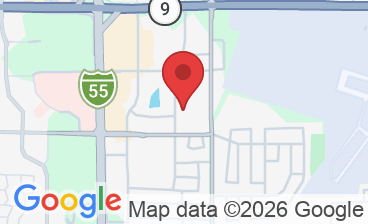
Headquarters: 131 N Williamsburg Dr. Bloomington, IL 61704
Tacoma, WA: 748 Market St #203, Tacoma, WA 98402, United States
Las Vegas, NV: 2300 W Sahara Ave Ste 800, Las Vegas, NV 89102, United States